
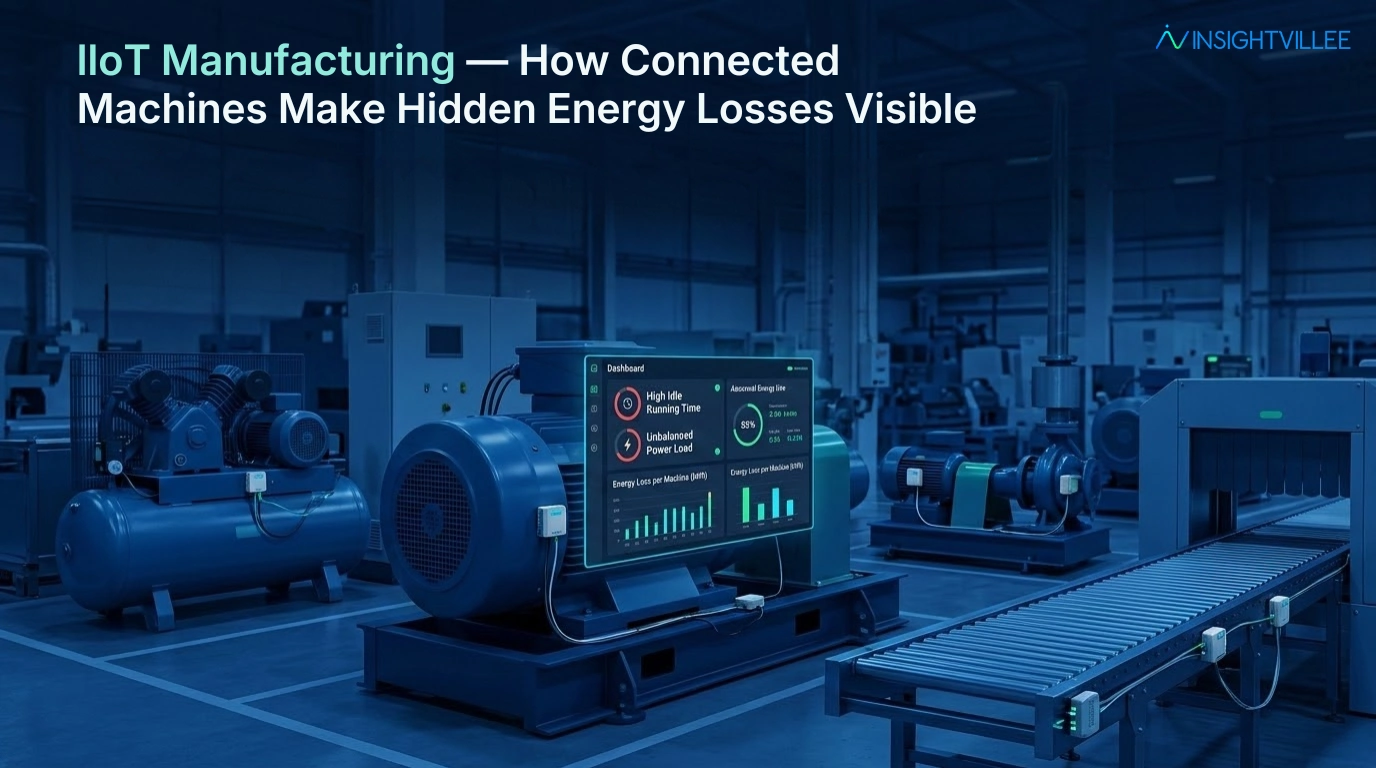
IIoT Manufacturing: How Connected Machines Make Hidden Energy Losses Visible
Every month, factory managers in India face a big headache when the electricity bill arrives. Energy costs keep going up, making it harder to stay profitable. Most plants try to control this by looking at monthly utility bills. But these bills only show how much power the whole factory used, not why or where it was wasted.
One of the most common patterns observed in manufacturing plants is that huge amounts of electricity are wasted silently at the machine level. This is where IIoT manufacturing comes to the rescue. By using industrial IoT technology, factory heads can finally see exactly how each machine uses power, helping them turn raw data into smart choices.
What Is IIoT in Manufacturing?
Understanding Industrial Internet of Things (IIoT)
IIoT stands for Industrial Internet of Things. It simply means connecting factory equipment to the internet using small electronic devices.
How Connected Machines Generate Operational Data
When we talk about connected machines, it means attaching machine sensors to older equipment or using the built-in computers of new machines. These sensors talk to each other and send continuous updates about speed, heat, and power usage.
Why IIoT Is a Foundation of Smart Factory Operations
Instead of checking machines by hand, a smart factory uses these sensor networks to watch the whole floor automatically. It creates a digital map of how the plant is running every second.
Why Hidden Energy Losses Go Undetected in Manufacturing Plants
Plant-Level Energy Data Lacks Context
A big factory bill does not tell you which motor is broken. It lacks context. You cannot tell if high power use was due to a heavy workload or a faulty machine.
Utility Bills Show Consumption, Not Causes
Utility bills are like a report card that only gives a final grade without showing which subject needs work. They show the total damage but hide the real causes.
Energy Waste Often Happens During Normal Operations
In practice, the biggest challenge is often that waste happens right under our noses. Machines might look like they are working fine, but they could be drawing twice the power they actually need.
Manual Energy Audits Provide Limited Visibility
An expert team coming once a year for an energy audit only gives a single snapshot. It misses the daily changes on the factory floor.
Common Sources of Hidden Energy Losses
Many manufacturers discover that their biggest enemy is not major breakdowns, but small, hidden energy losses.
- Idle and Standby Equipment: In many plants, machines are left running completely empty during lunch breaks or shift changes.
- Compressed Air Leakages: Air compressors often run extra hours just to pump air through tiny, unseen holes in old pipes.
- Overloaded Machines: A machine forced to run faster than its design limit gets hot and gulps extra electricity.
- Production Bottlenecks: When Line A slows down, Line B often idles while waiting, wasting power the whole time.
- Poor Equipment Health: Bearings that need oil cause friction, forcing the motor to work harder.
How Connected Machines Make Energy Losses Visible
Real-Time Machine-Level Energy Monitoring
By using IoT sensors, managers can see power usage minute by minute. Machine-Level Energy Monitoring: How Large Plants Find and Fix Hidden Energy Losses helps teams spot exactly which asset is misbehaving.
Tracking Energy Consumption by Asset
Instead of guessing, production teams can compare two identical machines to see if one uses more power than the other.
Detecting Abnormal Consumption Patterns
If a conveyor belt suddenly starts drawing 20% more power than it did yesterday, the system flags it immediately.
Identifying Energy Waste During Non-Production Hours
Data frequently reveals that plants use a lot of power on Sundays even when no items are being made.
Why Data Alone Is Not Enough
What we frequently see across production facilities is a mountain of data but zero answers. Having thousands of machine data points does nothing if nobody knows what they mean.
Production teams often focus on symptoms while the underlying issue remains hidden. True value comes when you connect energy data with actual production numbers to understand the “why” behind the waste.
How AI-Powered Manufacturing Intelligence Improves Energy Management
Traditional tracking only tells you what happened in the past. Artificial Intelligence (AI) helps by looking at the big picture to find hidden patterns across different processes.
AI does not replace human managers; it serves as a helper that scans data around the clock. It alerts maintenance teams before costs shoot up, helping them make faster, better choices on the floor.
Key Energy Metrics Manufacturers Should Monitor
High-performing manufacturers typically track these vital numbers:
| Metric | What It Tells You |
| Energy Consumption per Machine | Which specific asset is eating up the most power. |
| Specific Energy Consumption (SEC) | The exact electricity needed to make one single product. |
| Idle Running Time | How many hours a machine wasted power while doing nothing. |
| Peak Demand | The highest amount of power drawn at one time, which raises tariff rates. |
Real-World Scenario: Finding the Real Source of Energy Waste
Imagine a large plastic moulding plant in Gujarat facing huge power bills. Traditional reports blamed the older backup motors.
However, machine monitoring data showed a different story. The old motors were fine. The real culprit was a set of cooling pumps that ran at full speed even when the main machines were turned off. By fixing this logic, the plant saved lakhs of rupees in just one month.
Common Mistakes Manufacturers Make
- Monitoring Without Context: Tracking power without knowing how many units were produced.
- No Clear KPIs: Collecting data without setting goals like lowering SEC by 5%.
- Focusing Only on Big Systems: Ignoring smaller machine sensors that track minor speed losses.
How Manufacturers Can Start Building an Energy-Intelligent Factory
- Identify High-Energy Assets First: Start small by targeting your biggest power-guzzling machines.
- Connect Critical Utilities: Place sensors on main air compressors and boilers.
- Establish Baselines: Find out what “normal” power use looks like for your plant.
- Integrate Data: Link your energy data with maintenance logs to see how wear and tear affects power use.