
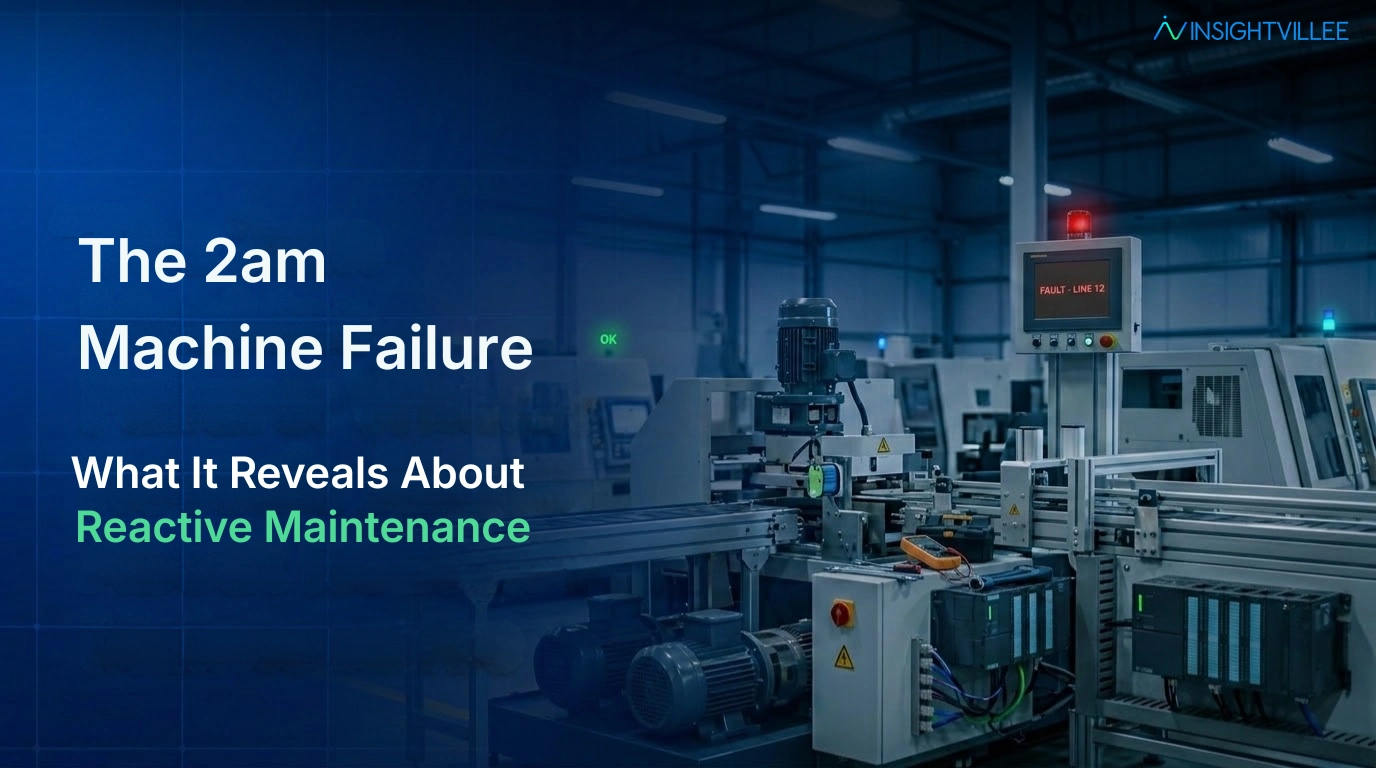
The 2am Machine Failure: What It Reveals About Reactive Maintenance
It is 2am. A machine on your most critical line has stopped. The shift supervisor is calling in a technician. Production is frozen. And by the time the sun rises, three shifts will have felt the impact.
A machine failure at this hour does not just cost you a repair. It costs you output, manpower, customer trust, and team morale. Most plants treat it as an incident. The smarter question is what it reveals about the maintenance system behind it. The Full Cost of Unplanned Downtime breaks down exactly how large that cost becomes once you count every layer.
Why a 2am Machine Failure Is More Than a Breakdown
The Immediate Production Stop
The moment the machine stops, the line stops. Parts pile up on one side. Downstream processes starve on the other. Every minute without a fix costs output that cannot be recovered in the same shift.
The Emergency Callout Chain
Someone calls the maintenance supervisor. The supervisor calls a technician. The technician arrives, assesses the fault, realizes the spare is not in stock, and calls a supplier. By the time parts arrive, hours have passed.
The Pressure on Maintenance and Operations Teams
Night shift maintenance teams are smaller. Decisions are made under pressure with limited information. Mistakes made in a 2am rush often create secondary problems that surface the following day.
The Hidden Cost of Restarting the Line
Getting a line back to full speed after an unplanned stop takes time and energy. The first production run after restart frequently produces off-spec output. That scrap is rarely counted as part of the failure cost.
What Reactive Maintenance Looks Like in Real Plants
Waiting Until Equipment Fails
In a reactive maintenance setup, no one acts until something breaks. The machine is running, so the assumption is that everything is fine. The failure at 2am is the first signal that anything was wrong.
Relying on Technician Experience Alone
Experienced technicians carry enormous knowledge in their heads. But that knowledge cannot monitor 200 machines across three shifts simultaneously. It is not a gap in skill. It is a gap in visibility.
Fixing Symptoms Instead of Root Causes
The bearing is replaced. The machine restarts. But why did the bearing fail early? Without data, no one knows. Three months later, the same machine fails the same way.
Repeating the Same Failure Across Shifts
When root causes are not tracked, the same failures repeat. Maintenance logs fill up with the same machine names and the same fault codes, but nothing changes because no one is reading the pattern.
The Real Cost of a Late-Night Machine Failure
Lost Production Output
Every hour the line is down is an hour of output that cannot be recovered. Night shift production is often planned to meet morning dispatch targets. An unplanned breakdown at 2am breaks the entire day’s plan.
Idle Labor and Shift Disruption
Operators on shift are still being paid while the machine is down. A multi-hour unplanned breakdown can idle an entire section of the plant for the rest of the night.
Emergency Spare Parts and Repair Costs
The direct cost of an unplanned breakdown, including rush procurement, overtime, and expedited repair, is typically two to three times the cost of a planned fix. This is the most visible part of the downtime cost from any single unplanned breakdown.
Delayed Dispatch and Customer Commitments
When production stops at 2am and the shift is lost, the morning’s dispatch targets slip. Orders that were supposed to leave by noon are now delayed. Customers notice.
What the Failure Reveals About Your Maintenance System
Missing Machine Health Visibility
If the first sign of a problem was the machine stopping, the plant has no visibility into machine health. The breakdown is a symptom. The real problem is the absence of early warning.
Weak Failure Pattern Tracking
Has this machine failed before? What was the cause? How long did repair take? If your team cannot answer these questions quickly, failure pattern tracking is missing. And without it, plant downtime from the same machines will keep recurring.
Disconnected Maintenance and Production Data
Maintenance data and production data live in separate systems in most plants. No one connects machine health trends to production performance until after a breakdown has already happened.
Lack of Early Warning Indicators
Every machine gives signals before it fails. Vibration changes. Temperature rises. Current draw increases. Without monitoring, these signals pass unnoticed until the machine stops on its own.
Why Traditional Logs Often Miss the Warning Signs
Manual Logs Capture Events, Not Patterns
A maintenance log records what happened and when. It does not flag when a pattern is forming across multiple entries on the same machine. Reading patterns requires connecting data that manual logs keep separate.
Small Abnormalities Go Unnoticed
A slight rise in operating temperature over two weeks is nearly impossible to notice through manual checks. Sensors catch it automatically. A production stoppage that follows is preventable once you know the signal exists.
Data Remains Stored but Not Interpreted
Many plants have more data than they realise. SCADA systems, PLC logs, energy meters. The problem is not data availability. The problem is that no one is turning it into maintenance intelligence.
How Sensor Data Changes the Maintenance Response
Detecting Vibration, Temperature, Load, and Pressure Changes
Sensors read machine health continuously. When vibration on a motor begins to drift from its normal range, the system flags it. The maintenance response shifts from emergency callout to scheduled inspection.
Identifying Early Failure Signals Before Breakdown
Most equipment failures develop over days or weeks before they cause a stoppage. Sensor data captures the gradual shift and alerts the team while there is still time to act.
Connecting Machine Health With Production Conditions
A machine running at a higher load than designed will degrade faster. Sensor monitoring connects operating conditions to health signals so teams understand not just that a machine is deteriorating but why.
From Emergency Repairs to AI-Driven Prevention
Turning Machine Data Into Maintenance Intelligence
Raw sensor data needs interpretation. AI-powered platforms analyse patterns across machines, shifts, and operating conditions to surface the signals that matter and rank them by failure risk.
Prioritizing High-Risk Assets
When three machines show early warning signs at the same time, which one gets attention first? AI ranks risks by severity and production impact, so the maintenance response goes to the right machine at the right time.
Predicting Failures Before They Stop Production
The goal is not to respond faster to equipment failure. The goal is to act before the failure happens. Connected data and intelligent analysis make that possible for the first time in most plants.
Key Metrics That Reveal Reactive Maintenance Risk
MTBF
Mean Time Between Failures. A falling MTBF on any machine is a leading indicator that health is declining.
MTTR
Mean Time To Repair. High MTTR means recovery is slow. Often a sign of poor parts availability or unclear fault diagnosis.
Repeat Failure Rate
If the same machine fails the same way more than once, root cause is not being addressed. This metric exposes the gap.
Emergency Maintenance Cost
Track what each unplanned repair costs, including parts, overtime, and production loss. Visibility into this number builds the case for investing in prevention.
Real-World Scenario: What One 2am Failure Can Teach
The Breakdown Event
A mid-size FMCG plant experienced an equipment failure on its primary packaging line at 2:15am on a Tuesday. The line had been running at full capacity to meet a Wednesday dispatch deadline.
What the Team Initially Saw
A seized conveyor motor. No spare in stock. Technician called in at 2:30am. Parts sourced by 5am. Line restarted at 6:45am. Four and a half hours of production lost. Dispatch deadline missed.
What the Data Later Revealed
A review of energy data showed the motor had been drawing 18 percent above its normal current for nine days before failure. Temperature readings had also been climbing steadily. Both signals existed in system logs. Neither had been reviewed.
Corrective Actions Taken
The plant installed vibration and temperature sensors on all critical conveyor motors and set automated alert thresholds. Spare parts planning was updated to include fast-moving components flagged by sensor patterns.
How Prevention Changed the Outcome
In the four months after, the same motor class produced zero unplanned stoppages. Two potential failures were caught and resolved during planned windows. The Wednesday dispatch deadline was never missed again.
How Plants Can Reduce Late-Night Breakdowns
Identify Critical Assets First
Which machines cause the most damage when they fail? Start monitoring those. Night shift failures on critical line assets are the most disruptive and the most preventable.
Track Repeat Failures and Root Causes
Every repeated failure is evidence that the root cause was not addressed the first time. Build a record. Review it monthly.
Set Early Warning Thresholds
Define what abnormal looks like for each machine before setting up alerts. Thresholds based on manufacturer specs and maintenance history are more accurate than generic defaults.
Build a Prevention-First Maintenance Workflow
Alerts only create value when they trigger action. Define who receives each alert, what they do, and how quickly. Make the process clear before the next 2am call comes.